Dr Monique
Charles
Cultural Sociologist & pioneer in Black British Music studies. Bodybuilder. Cardologer. Sound Healer. Brainy, Brawny, Beautiful...with Bamboos!
Brainy
Dr Monique Charles completed her PhD at The University of Warwick. She is one of the first academics to conduct study on grime music and is a founder of Black British Music Studies.Download her overview here
Qualification
PhD, Sociology
Year
2016
Dr. Charles is the editor of Black Music in Britain in the 21st Century (Liverpool University Press, 2023) and has published chapters with Intellect, Routledge, and the British Library.You can find publications and conference listings here
Dr. Charles has published chapters with Intellect, Routledge, and the British Library. She serves on the editorial boards of Global Hip Hop Studies, the International Association for the Study of Popular Music (University of California Press), Cultural Sociology (British Sociological Association), and Manchester University Press’s Subcultures series.Her advisory work on the British Library’s Beyond the Bassline (winner of the Association of Cultural Enterprises Best Book Award and Museums + Heritage Awards in 2025) and her contribution to V&A East’s The Music is Black: A British Story place her at the intersection of public heritage and cutting-edge scholarship. She also appears in the BBC Bitesize / BBC Teach series The Music is Black: Celebrating Black British Music, a national curriculum resource produced with V&A East. A member of Sacred Cyphers UK, she bridges spiritual practice, sound, and Black cultural knowledge, and she organised and keynoted the Bashy Conference at The Roundhouse, London (Being Poor is Expensive). Her original frameworks, Musicological Discourse Analysis and AmunRave Theory, offer new tools for analysing genre, sound, and social context together.It is my culture. It is the bassline my grandparents' generation brought over to Britain and passed down to me as a third-generation Caribbean British child. The music (grime, garage, reggae, broken beat, Afrobeats etc.) is an inheritance. It is not just my research subject. It captures how Black Britain survived, innovated, and refused to be silenced. I study it because nobody was writing our sonic history with the rigour and love it deserved. It demands methodologies on its own terms. I approach the research in ways that let me think with my whole self rather than carve off the parts that do not fit a conventional academic mould. Black British music is my brainy, my brawny, and my beautiful. It requires the intellectual rigour of mapping cultural formation, the physical power of the rave and the sound clash, and the spiritual beauty of a diasporic people making meaning out of bass, space, and resistance.
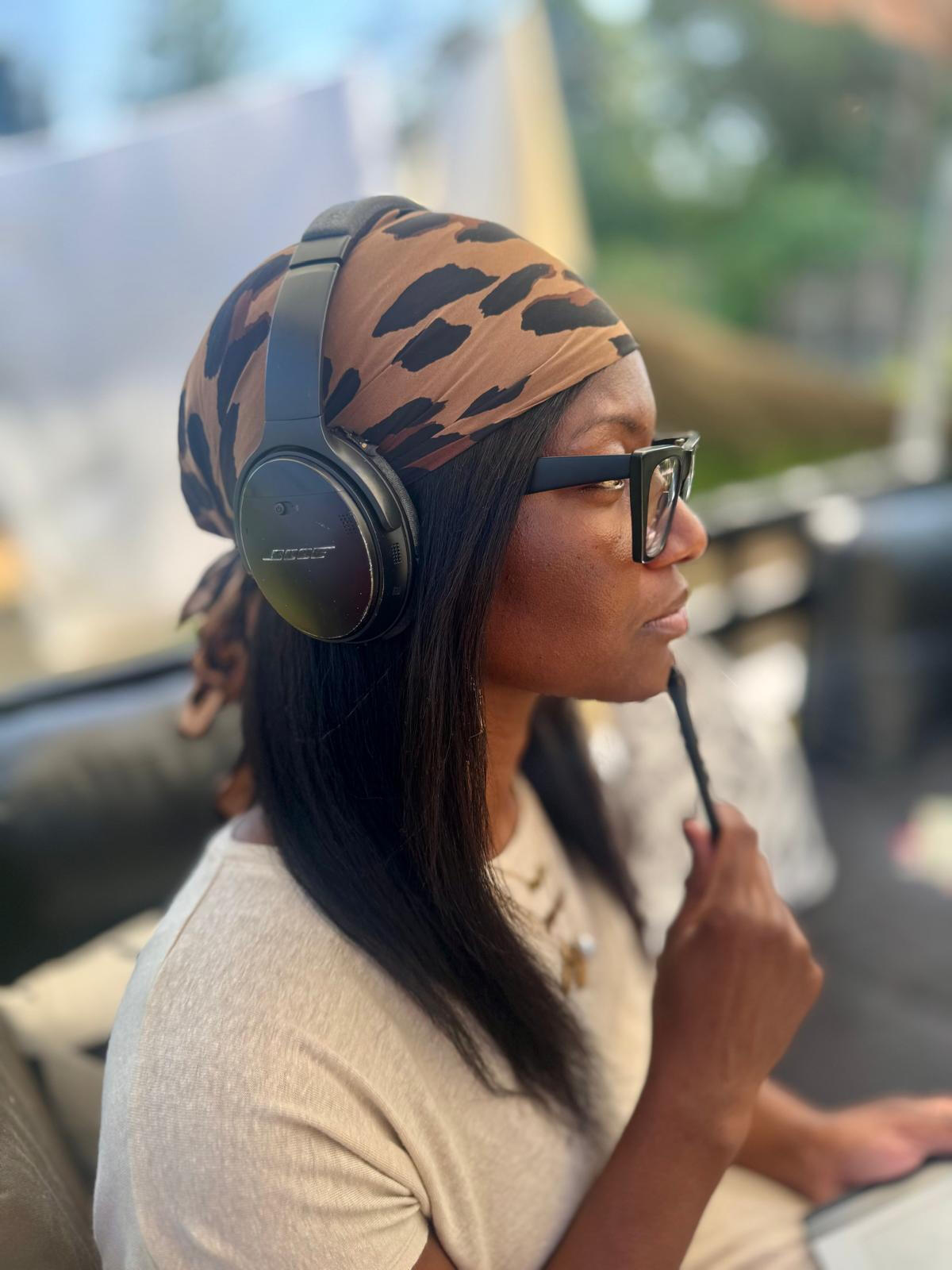
Why Black British Music?
It is my culture. It is the bassline my grandparents' generation brought over to Britain and passed down to me as a third-generation Caribbean British child. The music (grime, garage, reggae, broken beat, Afrobeats etc.) is an inheritance. It is not just my research subject. It captures how Black Britain survived, innovated, and refused to be silenced. I study it because nobody was writing our sonic history with the rigour and love it deserved. It demands methodologies on its own terms. I approach the research in ways that let me think with my whole self rather than carve off the parts that do not fit a conventional academic mould. Black British music is my brainy, my brawny, and my beautiful. It requires the intellectual rigour of mapping cultural formation, the physical power of the rave and the sound clash, and the spiritual beauty of a diasporic people making meaning out of bass, space, and resistance.
01/
Black on Black Sounds: Music, Migration, and the 'NU-K Blak' Identity Formation in Early 21st Century Britain
Afrobeats is reshaping who Black Britain is. This paper tracks the demographic and sonic shift from Caribbean-centred 'UK Blak' to a new West African-inflected NU-K Blak identity, and what that means for the future of Black Britishness.
02/
Make It Funky for Me: Black British Women's Explorations of Britishness, Womanhood, and Artistry Through 2000s Music.
Black British women shaped the UK garage and UK funky sounds. This article traces how Black women artists navigated the scene, claimed their artistry, and redefined Britishness and womanhood on their own terms.
03/
MDA as a Research Method of Generic Musical Analysis for the Social Sciences: Sifting Through Grime (Music) as an SFT Case Study
Need a rigorous way to analyse music beyond the conservatory? I introduce Musicological Discourse Analysis and the Sonic Footprint Timestamp. Its a holistic framework for studying genre, sound, and social context together, using Grime as the proving ground.
04/
Grime & Spirit: On a Hype! Step into the rave and feel the spirit move. This piece maps how Grime live performance generates sacred power through sound, embodiment, and Black Atlantic cultural practice. I Introduce AmunRave Theory and Liminal Energy Power Spirals to show exactly how the spirit enters the dance.
05/
VIP Backstage Gate Pass Nothing should stop you from getting your paper! Head over to ResearchGate and put in a request to get exclusive access (& use) to other papers from my catalogue HERE!
06/
The PhD Receipt All awarded doctorates will have evidence of their work - you know, their receipt, so here's mine examining early grime music from different perspectives.
Brawny
The gym is where theory meets flesh. Its where the "brawny" in brainy, brawny, beautiful is sulpted. As a competitive bodybuilder, I move through spaces that were never built with me in mind. Bodybuilding teaches patience, resilience, and discipline. Strength is physical but it is mental, spiritual, political, and deeply personal.
Beautiful
The aesthetic meets spiritual, meets the intellectual. Sound healing and cardology are the beautiful in my brainy, brawny, beautiful because they work with the invisible, spiritual architecture of a person. They restore harmony and hope to bring healing. More obviously, I am not, nor do I look like a conventional academic. I am a Black woman who lifts, can command the stage in a bikini, brings tuning forks into scholarly spaces, and reads the cards alongside my research. Beauty is holistic, disruptive, and truly being seen.

Sound Healing
Tuning forks move blocked energy and restore harmonic balance in the body, using specific frequencies. They work at the cellular level. Trained since 2018, this practice influences my research on sonic embodiment. I am an Ordained Minister, so apply sound as energy, vibration and prayer. Tuning forks help recalibrate your nervous system and return you to yourself. It is healing through listening. The body always knows what it needs to hear.
Cardology
Cardology is the ancient system of birth card astrology. It uses the standard 52-card deck to map your soul's blueprint, karmic patterns, energetic and temporal rhythms with precision. Certified in 2021, this spiritual tool illuminates the architecture of the present: your strengths, your challenges, and the seasons of growth unfolding around you.